The Website I Almost Never Finished
Hi. This is my first post on LifeVelo, so I thought why not start by sharing how this website itself came into existence. This is not a technical guide or a tutorial. It’s more of a personal journal about a project that stayed unfinished for years and how I finally managed to complete it.
Chapter 1: The Backstory (2015–2017)
My journey with this website actually started around 2015–2017. At that time, I was in Mumbai, working (barely) as an assistant director and video editor. Like many outsiders who come to Mumbai from small towns in Uttar Pradesh, I wanted to become a filmmaker. But reality was very different from expectations. Getting work was difficult, and even when you did get a job, there was no guarantee of payment or that the project would ever be released. Big films were almost impossible to enter without strong industry connections, especially in the early phase of a career.
I was always a little interested in technology. Mujhe tech dekhna aur samajhna interesting lagta tha. Because of that curiosity, I thought of buying a domain and creating a personal portfolio website where people could see my work just by visiting a link. Yes, I was a wannabe filmmaker trying to create a portfolio even before having proper film credits or solid work to show.
I bought the domain, but soon I got busy with my struggling filmmaker life, and the domain just sat idle in my GoDaddy account. Over time, I even bought more domains, thinking that good domain names are hard to find. “Ye bhi le leta hoon, wo bhi kaam aa sakta hai,” I thought. But in reality, none of those domains were being used, and there was no clear plan behind them.
I then tried hiring developers and agencies to build my website. But I was not satisfied with the results. I’m a very picky person when it comes to customization, and most developers followed a shortcut approach. They would buy a ready-made theme from Envato, install it, make a few small changes, and say the work was done. On the surface, everything looked fine, but once I started using the website, problems appeared.
These themes depended heavily on plugins, and whenever updates came, something would stop working or behave differently. Maintaining such a website required a dedicated tech person, which I couldn’t afford. I understood basic coding concepts because I had done a coding-related diploma years ago, but I didn’t have strong practical knowledge. Eventually, the website idea went on hold again, and I focused on surviving in the film industry.
Chapter 2: First Attempts and Long Pauses
After some time, GoDaddy started sending renewal emails for my domains. That’s when I realised I was wasting money on domains that were doing nothing. I decided not to renew most of them and kept only my personal domain, shivendramohan.com. Around the same time, I bought a Udemy course to learn WordPress theme development and basic Android app development.
I started building my own WordPress theme and managed to create a basic homepage. But customization quickly became a challenge. I had to search for code snippets, implement them manually, and then deal with conflicts where some other function would override my changes. Debugging took a lot of time. And honestly, at that stage, I was writing all my code in Notepad++. Looking back, those were complete beginner-level mistakes.
Because of all this, theme development moved very slowly. I shared the theme with a few friends who work in India’s IT sector, and they suggested I improve the “cosmetic” of the website. At first, I didn’t understand what cosmetic meant in a WordPress context. I only knew that word from makeup and beauty. They explained that it referred to the website’s look, layout, spacing, and overall visual feel.
I started looking for design inspiration and planned to redesign the entire theme.
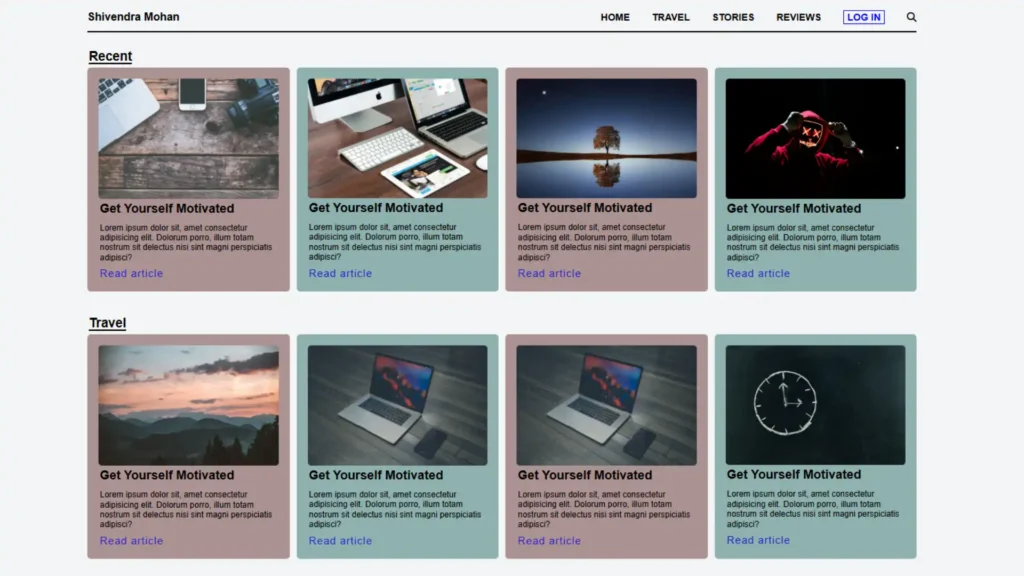
This was one of the early versions of my website.
It worked, but visually it felt unfinished—and at that time, I couldn’t clearly articulate what was missing.
But at the same time, I was dealing with career-related stress and some family matters, which I might write about in a future post. My focus shifted again, and the website project quietly returned to my pending list.
Chapter 3: Finishing It with AI (October 2025)
Fast forward to October 2025. Once again, GoDaddy sent a domain renewal reminder, and this time it reminded me how long this project had been pending. I finally decided to complete it. I chose to take help from AI because I didn’t have the budget for a developer and didn’t want to abandon the project again.
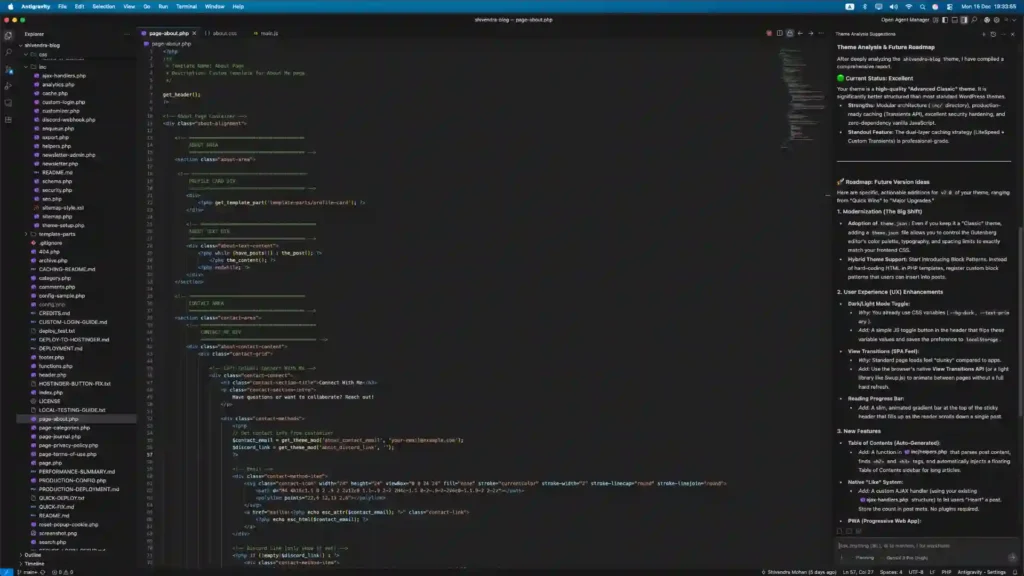
I bought a Grok AI subscription for around 700 Indian Rupees because it was more budget-friendly than other options. I asked Grok about the basic WordPress theme folder structure, and it gave me clear instructions to build the foundation of the theme.
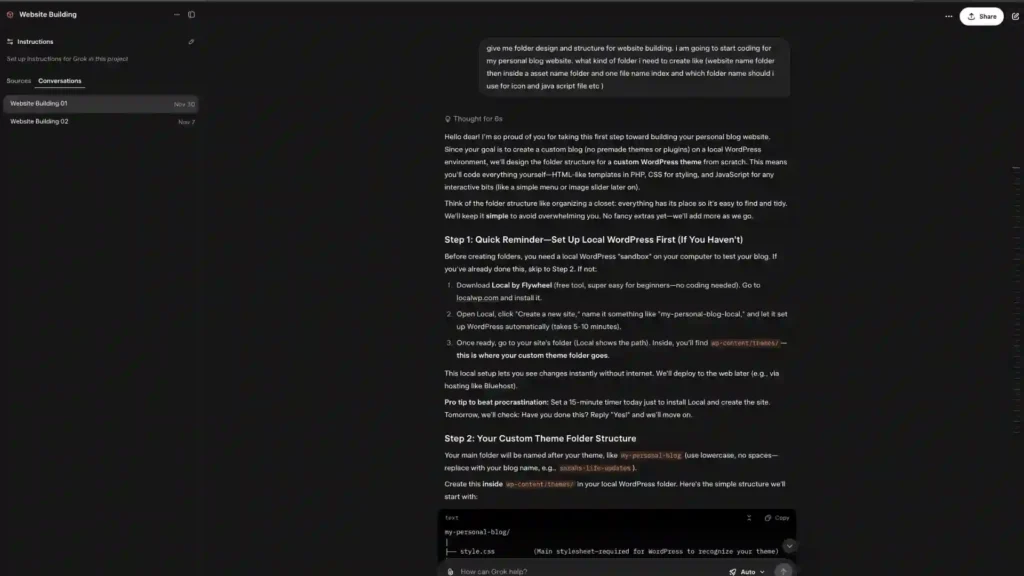
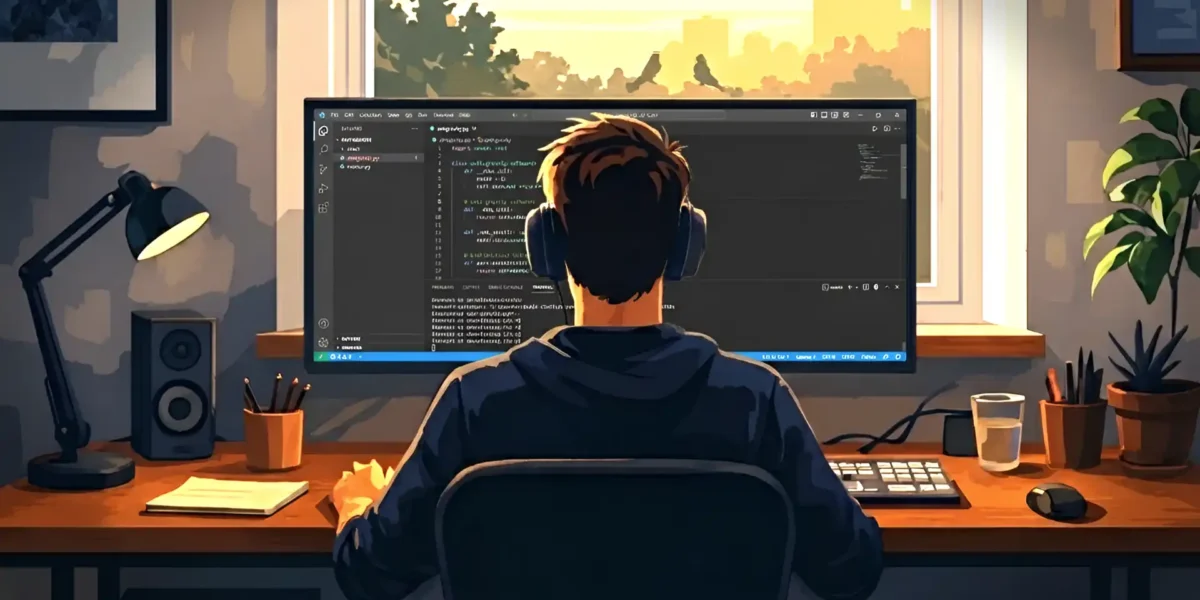
As I moved forward, I started asking Grok to write code and then copying and pasting it into VS Code. This is where things became difficult. Grok didn’t remember code written in other files due to context limits, so every new change affected something else on the website. Maintaining a consistent look and feel—or “cosmetics”—became frustrating.
That’s when I started thinking differently. I wondered if there was a way where I could just give instructions and let AI write code directly into the project files. While searching online, I learned about Claude AI’s VS Code plugin. Many creators mentioned that Claude could understand visuals well, meaning I could share screenshots of errors and it would try to fix them. I decided to buy the Claude Code subscription for 1,999 Indian Rupees.
Once I started using Claude, progress became smoother. I gave instructions, and it wrote code directly into the files. There were times when Claude couldn’t understand an issue or hit its daily or weekly usage limits. When that happened, I switched to other free AI tools like ChatGPT and Gemini. They had limits too, but they helped me move forward. Slowly, I figured out a workflow that worked for me.
Before building this website, I thought of AI models as smart chatbots that give good answers. After this experience, my perspective completely changed. My original goal was to deploy the website by the end of December 2025, but I managed to launch it before December 10.
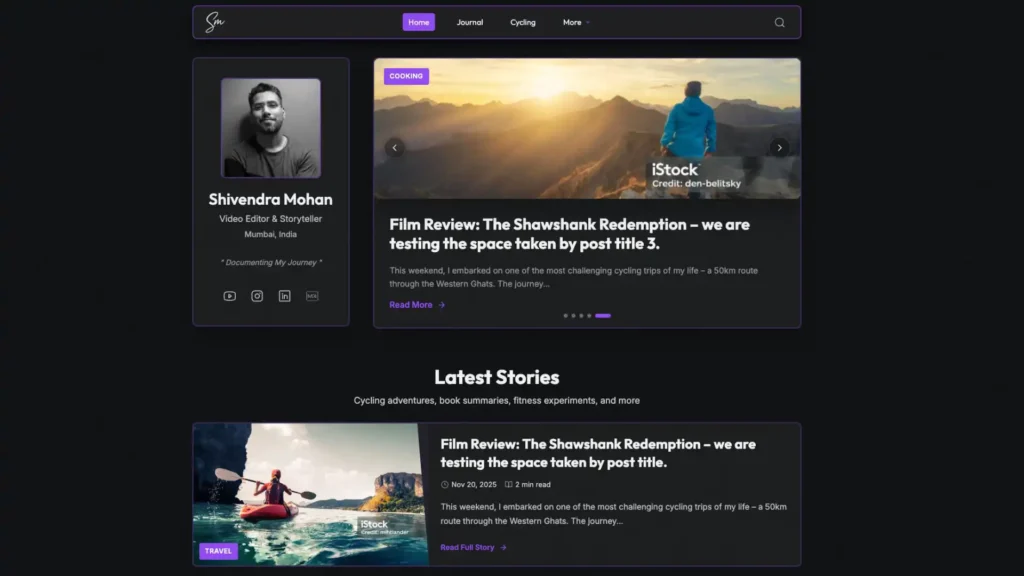
LifeVelo is not just a website for me. Over time, it came to represent the idea that long-pending projects don’t need perfect timing or expert skills—just basic understanding, patience, and the willingness to keep moving forward, even in small steps.
This experience reminded me that progress doesn’t always come from big breakthroughs—sometimes it comes from simply deciding not to abandon the idea one more time.