Domestic Violence and Its Impact on Children
This post is based on personal experience and observations. It is written to encourage awareness and reflection, not to provide professional, legal, or medical advice.
On March 27, 2023, around 10:45 p.m., I was working on an edit. My computer desk is placed near a window, and during long work hours, I often look outside to rest my eyes.
That night, I heard some noise outside. My attention moved away from the screen, and when I looked through the window, I saw a married couple arguing in a flat opposite my building. One of them was holding a sharp object. Their children—around 10 to 12 years old—were crying and desperately trying to stop them.
That scene still shocks me whenever I think about it.
Now imagine the kind of impact this moment could leave on those children. At this age, kids are supposed to learn, play, explore, and feel safe. Their minds are still developing. When they witness fear, violence, or emotional chaos, it can leave deep scars—sometimes without them even realizing it.
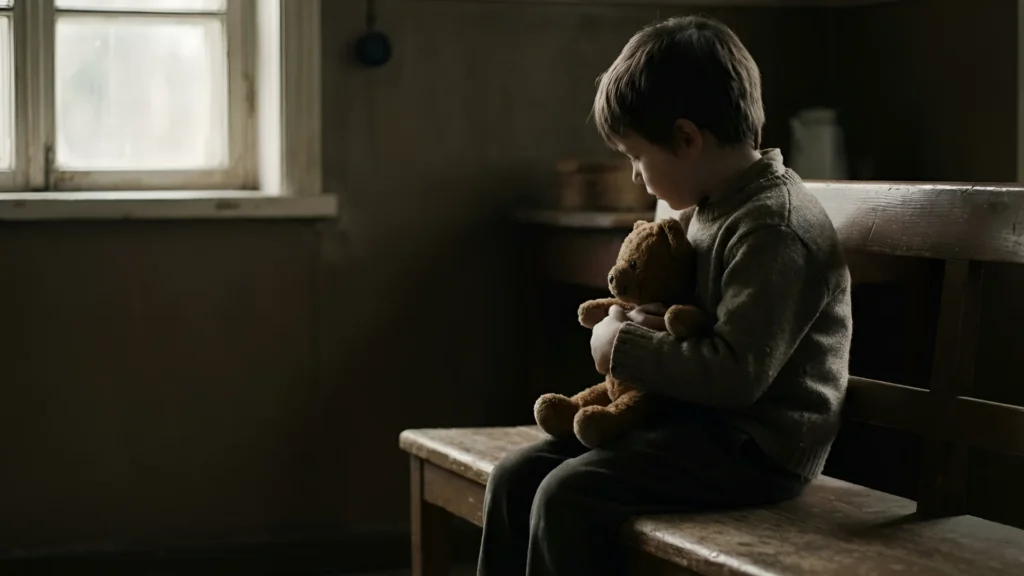
These incidents quietly become part of their memories, shaping their personality and emotional responses later in life—sometimes in healthy ways, but often in harmful ones.
Maya Angelou once said
“People may not remember exactly what you did, or what you said, but they will always remember how you made them feel.”
Some children may grow up believing that constant arguments are normal because that’s what they saw at home. Others may decide to never repeat their parents’ mistakes. Some may become emotionally withdrawn, believing that relationships inevitably lead to conflict. And some may grow resentful, feeling anger toward their parents for the environment they grew up in.
Every child responds differently—but none remain unaffected.
My grandmother used to say that a child’s eyes are like a camera—they record everything, even the things we think they don’t notice. That thought has stayed with me. It reminds me how important it is to be mindful of our actions, especially at home.
A home should be a safe and peaceful space—where children feel protected, learn positive values, and grow without fear.
Common Reasons Behind Frequent Arguments
In many cases, repeated arguments or fights happen due to a combination of factors, such as:
- Uncontrolled anger or short-tempered behavior
- Alcohol or substance abuse
- Lack of emotional compatibility or understanding
- Entering marriage without enough communication or emotional readiness
In the Indian context, these issues are unfortunately quite common and often remain unaddressed for years.
Some Thoughts on Possible Solutions
As parents, we need to be conscious of how our conflicts affect our children. Even if disagreements are unavoidable, the way they are handled matters deeply.
I strongly believe in communication. If there is an issue, it should be discussed calmly—away from children. Respecting each other’s perspective and choosing peaceful conversation over arguments can prevent long-term emotional damage.
If something hurts you, express it clearly and calmly. Saying “This made me uncomfortable” or “This decision affects me in this way” opens space for understanding. These are also behaviors children learn by observing adults.
One of the most damaging patterns for children is repeated exposure to aggression—whether due to anger issues, violent tendencies, or alcohol abuse. Violence never solves problems. It only passes them forward to the next generation.
If someone struggles with anger or addiction, seeking professional help is not a weakness—it’s responsibility.
In some situations, when all efforts fail and the environment continues to harm children, separation may become the healthier option. I know this is not easy, especially in a society where financial and emotional dependence is real—particularly for women.
But even small steps toward financial independence can create options. Side work, home-based skills, teaching, writing, or online work—anything that builds confidence and independence—can make a difference over time.
Writing about solutions is easy. Living them is hard. But change often begins with small, consistent efforts.
If we build safe and emotionally stable homes for children, we are quietly building a healthier society for the future.
This is a very broad and complex topic, and it isn’t possible to cover every aspect in a single post. I’m sharing this from personal experience and reflection, and for readers who want to understand this issue more deeply, I’ve added a few external resources below that may offer additional perspective and understanding.
Related video: